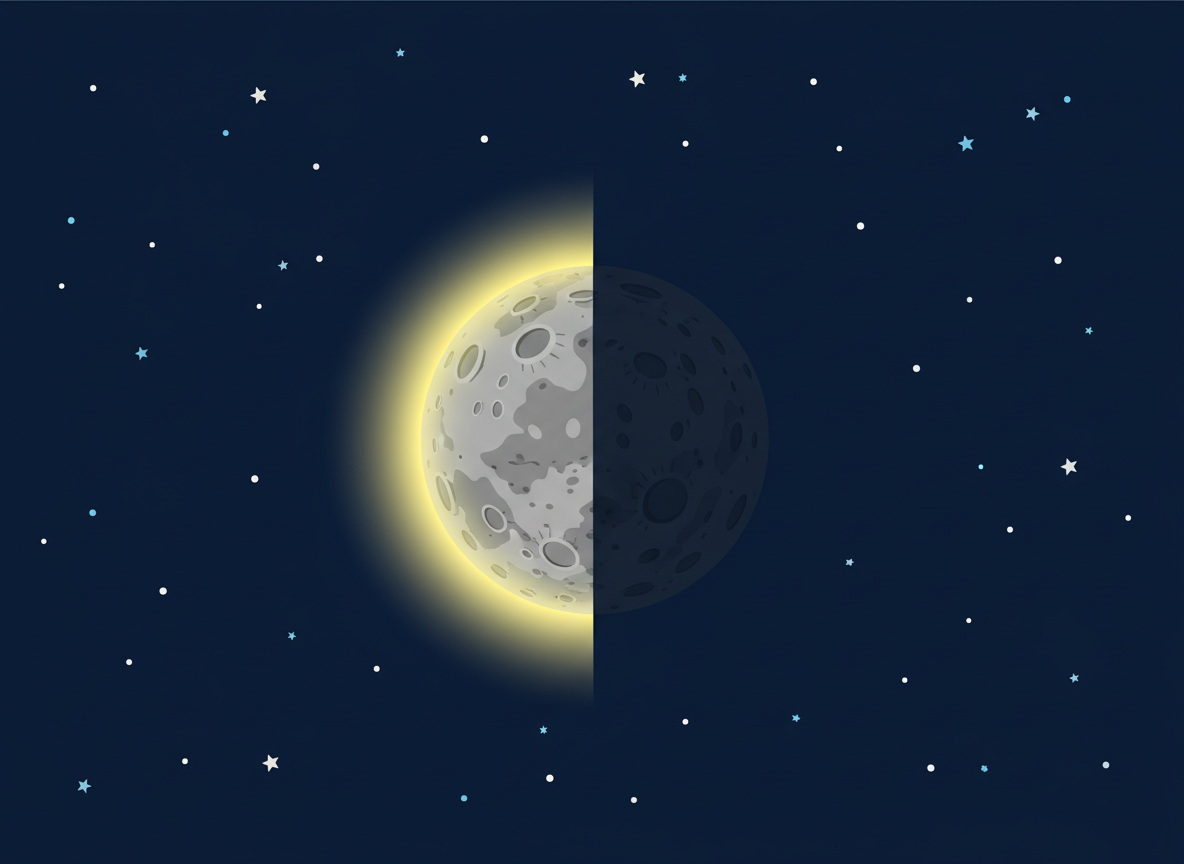
“Mom, this one’s closest to the sun, right? Mercury?”
“Yep, that’s the one.”
“So it must be super hot.”
“During the day, yeah. Crazy hot. Hot enough to melt certain metals.”
“Cool! …wait, why does it say ‘freezing at night’ right underneath?”
“That’s the wild part. At night, it drops to way below freezing. Colder than anywhere on Earth ever gets.”
“How can one planet be both?!”
“Mercury barely has any atmosphere. No blanket of air to hold heat in or spread it around. So the sunny side just bakes, and the second the sun’s not hitting a spot anymore, all that heat just… leaks straight out into space.”
“So it’s like taking off a blanket?”
“Kind of exactly like that, actually. Earth’s atmosphere works like a blanket, keeping temperatures a lot more even. Mercury doesn’t really have one.”
“Does anybody live there?”
“Nope. Between the extreme heat and the extreme cold, it’s not exactly cozy.”
“I bet it’s really quiet there, though. No wind, nothing.”
“Probably. Just rock, and sunlight, and shadow.”
She looks at the picture a moment longer. “Kind of lonely-sounding.”
“Maybe. Or maybe just really, really still.”
Now It’s Your Turn
Find someone this morning and see what you both remember.
- Why does Mercury get so hot during the day?
- Why does it get so cold at night?
- What’s missing on Mercury that Earth has?
(Whenever you’re ready: 1. It’s the closest planet to the sun. 2. It has almost no atmosphere to hold the heat. 3. A thick atmosphere, like a blanket.)
Maybe today, notice one thing that keeps you warm or cool, and think about what it’d be like without it.
답글 남기기